





What Is tritium breeding?
Tritium breeding is the production of tritium inside or near a fusion reactor by using fusion neutrons to react with lithium-bearing material. Tritium is a radioactive hydrogen isotope needed for deuterium-tritium fusion, but natural supplies are scarce. A key design measure is TBR = T_produced / T_burned, the tritium breeding ratio. A reactor must keep this ratio above one after losses to sustain its own fuel cycle.
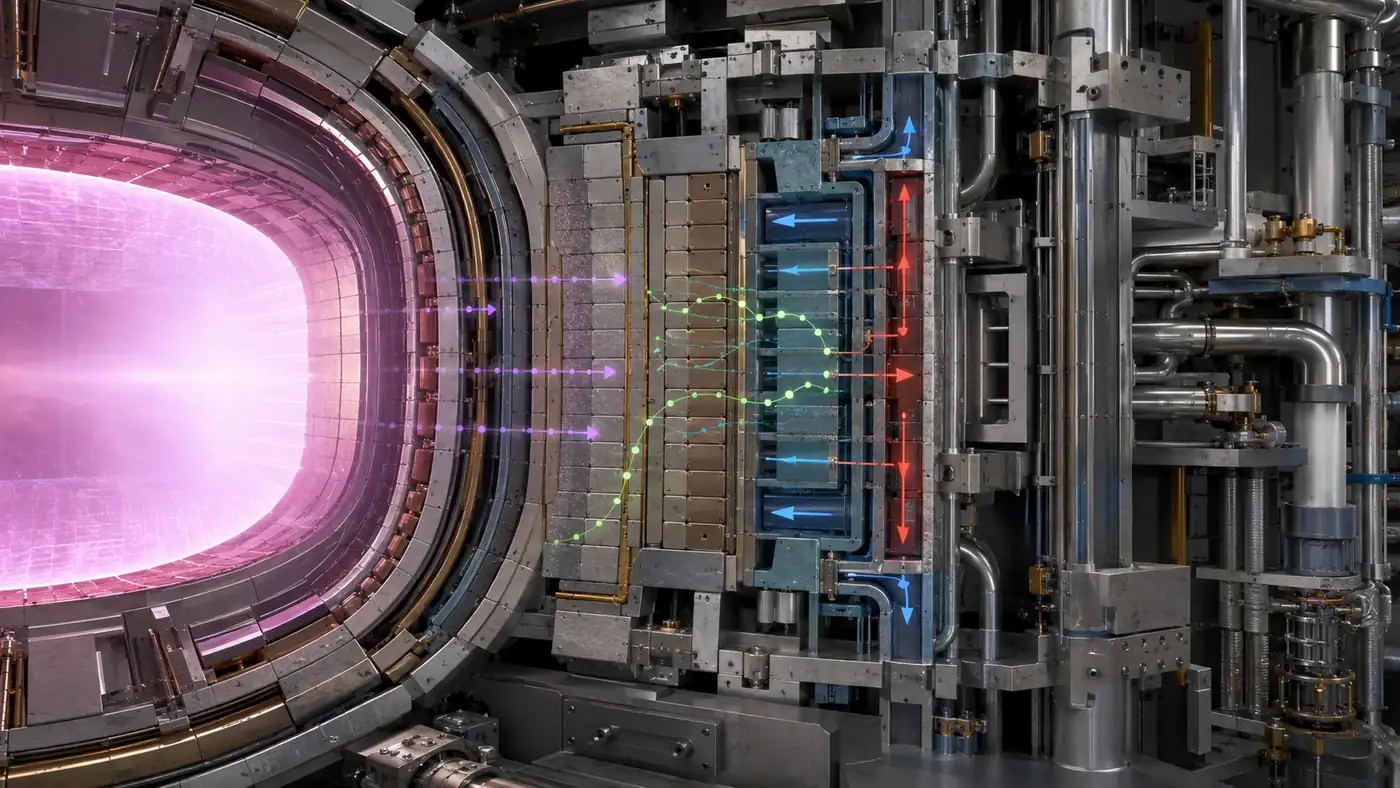
In real systems, breeding occurs in a blanket surrounding the plasma chamber. Neutrons from fusion reactions enter lithium compounds or liquid lithium mixtures and produce fresh tritium, while also depositing heat for power conversion. Blanket thickness, neutron economy, cooling channels, material activation, and tritium extraction all influence performance. In fusion fuel-cycle engineering, breeding links reactor physics directly to long-term operation.
The concept matters because deuterium is abundant, but tritium is not. Without breeding, deuterium-tritium fusion would depend on an external isotope supply too limited for large-scale energy systems globally today.
Used in devices include fusion blankets, neutron test facilities, tritium extraction systems, and compact fusion cells designed to refresh fuel from lithium during operation continuously.
Example:
In a fusion blanket, a neutron can strike lithium-6 and produce tritium that is later recovered for reuse as reactor fuel.
Related Terms:
NoSuchDevice is a free archive of machines that do not exist yet but already have a shadow in physics. I research and write every entry alone, with no ads. Take a look around the archive, or help keep it free.