





What Is Wave function?
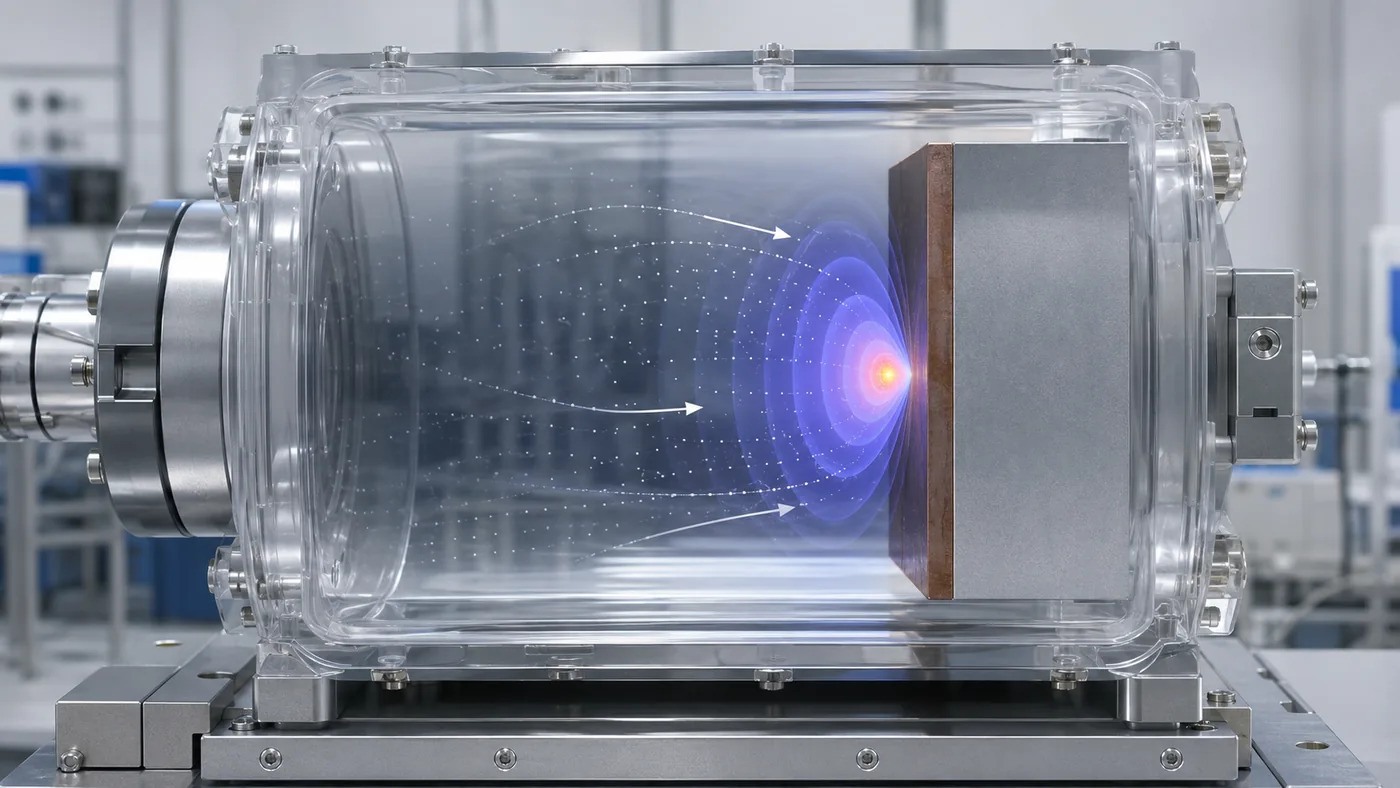
A wave function is a mathematical description of a quantum system that encodes the possible positions, energies, spins, or other measurable states of a particle or collection of particles. It is usually written as psi, and its squared magnitude gives a probability density: P(x) = |psi(x)|^2. The wave function is not a visible wave in space, but a compact way to represent how quantum possibility is distributed before measurement.
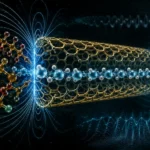
In real systems, a wave function changes according to the forces, boundaries, and materials around it. Confinement in a narrow channel, attraction to a charged surface, or interaction with an electromagnetic field can reshape the probability pattern and alter which outcomes can occur. In quantum membrane transport, such probability patterns help determine how molecules interact with nanoscale structures.
The concept matters because quantum behavior cannot be predicted by classical paths alone. Chemistry, semiconductor physics, spectroscopy, and nanoscale engineering all depend on wave functions to explain bonding, tunneling, orbital structure, and state transitions.
Used in devices include electron microscopes, quantum sensors, semiconductor lasers, and nanoscale filters where particle behavior depends on probability amplitudes rather than ordinary trajectories.
Example:
In a semiconductor quantum well, an electron’s wave function is confined between material layers, producing allowed energy levels that control emitted light.
Related Terms:
NoSuchDevice is a free archive of machines that do not exist yet but already have a shadow in physics. I research and write every entry alone, with no ads. Take a look around the archive, or help keep it free.