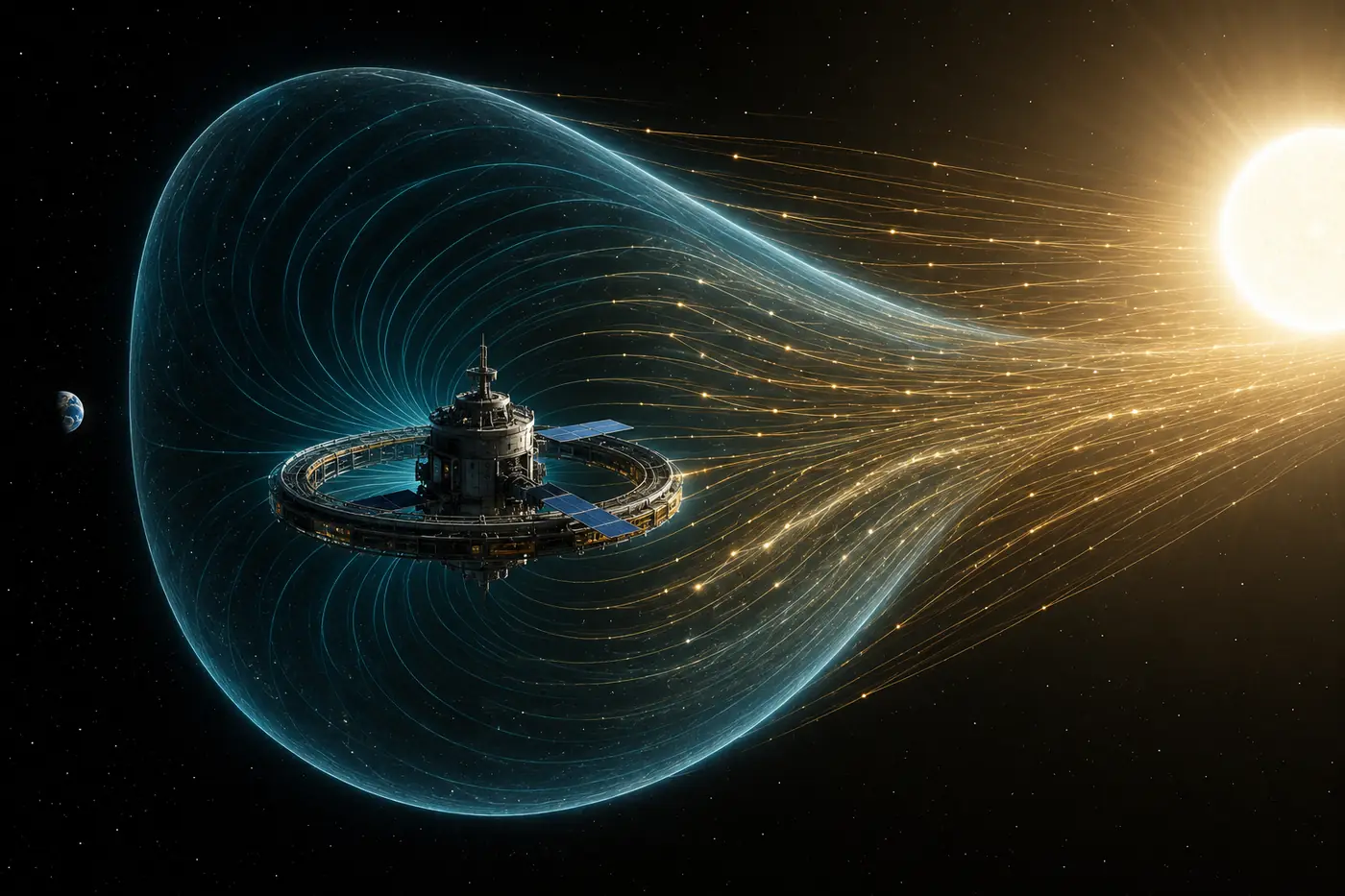






Atmospheric nitrogen fusion fuels attract attention because the idea hints at energy drawn from open air rather than mined or refined feedstock. The image of a reactor drawing its charge from an ambient gas raises a sense of freedom from hard logistics yet invites caution about whether a heavy nucleus can be driven toward productive fusion conditions without prohibitive confinement demands.
Momentum grows around the concept partly because the angle in play reframes a common molecule as a frontier energy carrier within an eco tech landscape. That framing introduces tension between the appeal of limitless feedstock and the uncertainties tied to physics thresholds, material endurance and long term stability. Developers face a balance between optimism about clean energy pathways and the reality that heavier nuclei behave in ways that complicate reactor design.
Key Takeaways
- Map tradeoffs between abundant feedstock and demanding reaction thresholds
- Weigh engineering burden created by heavy nucleus confinement
- Follow how long term material fatigue shapes reactor viability
- Track regulatory friction that could slow deployment in dense communities
- Recognize that limitless feedstock still depends on achievable fusion conditions
Table of Contents
Why Atmospheric Nitrogen Fusion Fuels Matter Now
Global energy demand keeps rising while pressure grows to cut emissions, land use, and extraction overhead. Carbon based fuels still dominate because they are easy to store, ship, and burn, yet they carry long tail climate and pollution costs. An energy system that draws on a chemically inert gas present in every air mass changes both the geography and the politics of supply.

Shifting Energy Feedstocks From Carbon To Nitrogen
Most current energy infrastructures lean on hydrocarbons pulled from concentrated deposits, refined through large industrial chains, then burned once at point of use. Control often sits with a small cluster of resource holders, and the entire chain embeds carbon release as a basic step. Moving to a model where the primary feedstock is atmospheric nitrogen reorients attention away from finding and defending deposits toward controlling high energy processing nodes that can be sited almost anywhere with air and grid access.
A nitrogen based fusion route would treat the atmosphere as an effectively uniform reservoir while placing complexity inside engineered equipment rather than in geography. That shift removes depletion narratives and reduces exposure to fuel embargoes or transport chokepoints. Environmental impact also changes character, since primary concerns move from carbon output and local extraction damage toward lifecycle burdens of plant construction, grid integration, and any byproducts of nitrogen fusion pathways. A world where energy conversion runs on air drawn through intake stacks invites different planning questions about location, resilience, and long range resource diplomacy than a world where value clusters around wells, mines, and pipelines.
Comparison of energy carriers
| Energy Carrier | Source or Form | Constraints and Risks |
|---|---|---|
| Fossil fuels | Concentrated carbon deposits | Emissions and depletion concerns |
| Hydrogen systems | Manufactured, storage sensitive gas | Infrastructure and leakage limits |
| Nitrogen fusion fuels | Ambient, inert atmospheric gas | High tech plant and grid coupling |
Climate, Resource Pressure And The Appeal Of Ambient Gases
Climate targets, land constraints for renewables, and rising material demand converge on a simple tension: deep decarbonisation without infinite room for wind farms, solar fields, or new dams. A nitrogen fusion fuel platform speaks to that tension by promising high energy density per site while drawing feedstock from air already in circulation. If long horizon research can demonstrate acceptable emissions profiles and manageable thermal footprints, nitrogen fusion fuels become a way to relieve both extraction pressure and land occupation while still matching deep electrification and industrial heat goals.
A nitrogen centred framing therefore motivates research even in the face of hard physics challenges, because it links abundant, politically neutral feedstock with climate aligned outcomes in a way that no single renewable build out can match on its own.
Turning Inert Nitrogen Into A Fusion Fuel Platform
Nitrogen in air appears chemically quiet, yet atomic nuclei carry large stored energy if fusion pathways can be accessed. A core concept for atmospheric nitrogen fusion fuels is to treat the gas as a low grade resource upgraded through extreme temperature and confinement into an energy dense fuel platform. The path runs from molecular nitrogen in air, through isotope handling and plasma conditions, to energy carriers that behave in familiar ways for grids and industry.
Candidate Fusion Pathways Involving Nitrogen
Fusion concepts around nitrogen focus on isotopes such as 14N and 15N that could participate in multi step chains with lighter nuclei. Reaction schemes might couple nitrogen with hydrogen or helium isotopes, using intermediate reactions to reach net positive energy release while respecting conservation laws and known cross section behaviour. Any such pathway relies on extremely high temperatures, strong confinement, and careful shaping of plasma composition to favour desired collision channels.
One family of speculative approaches treats nitrogen as a catalyst like participant, where it enters a reaction chain and emerges in a modified state that can re enter cycles. Another focuses on direct nitrogen nitrogen fusion at extreme densities that only advanced confinement schemes could reach. Reaction chains would be modelled with transport codes and high performance simulations to gauge stability, impurity build up, and energy gain margins. Even when numbers remain uncertain, the conceptual outcome is a fusion core that converts a flow of conditioned nitrogen into heat and energetic particles without contradicting established nuclear physics.
Harvesting And Conditioning Atmospheric Nitrogen
Atmospheric nitrogen arrives as a dilute component within humid, dusty air masses. A device concept therefore needs front end machinery that draws air, filters particulates, dries the stream, and routes it to separation stages.
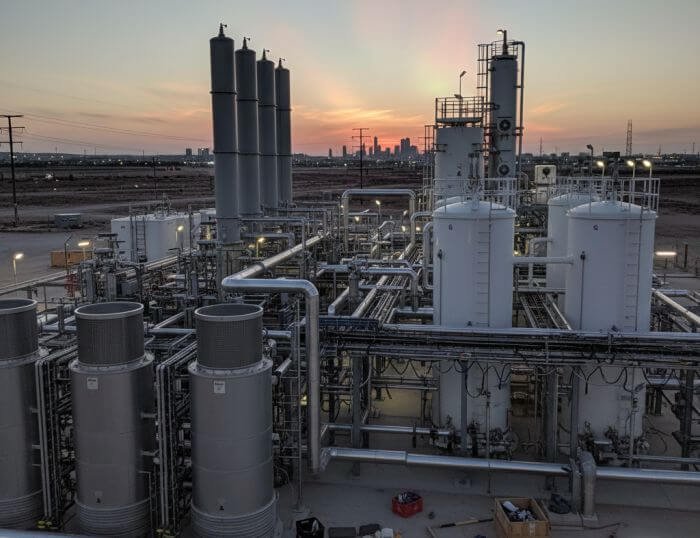
Cryogenic distillation, pressure swing adsorption, or membrane based systems can concentrate nitrogen to the purity and pressure ranges needed at the fusion boundary. Downstream compression smooths fluctuations in intake conditions and builds buffer volumes, while further conditioning may adjust isotopic mix or add trace species that stabilise plasma behaviour. Control around this front end focuses on delivering a predictable, low impurity nitrogen stream to the fusion core, decoupled as far as possible from local weather, humidity changes, or airborne pollution.
From Fusion Output To Usable Fuel Forms
Fusion output arrives as a blend of high temperature plasma, fast particles, and structural heat in chamber walls and shielding. Converting that raw output into fuel forms begins with heat extraction loops that feed high efficiency turbines or direct thermal processes for industry.
Beyond electricity, part of the energy budget could route into high temperature electrolysis, synthetic fuel synthesis, or thermal storage blocks that shift delivery in time. Design work revolves around matching nitrogen fusion output profiles with energy carrier formats that grids, transport systems, and heavy industry already understand. Compared with current fusion schemes, nitrogen based variants face the same need for robust extraction and conversion chains, yet the link back to air as feedstock encourages layouts that emphasise continuous, base level operation tied into large scale storage rather than short burst experimental runs.
Taken together, the core concept frames atmospheric nitrogen as a low grade input upgraded through fusion physics into energy carriers that can fit existing infrastructures. Every later design choice sits on top of that chain from chemically quiet gas to managed streams of heat, particles, and derived fuels.
Design Constraints For Nitrogen Fusion Fuel Systems
A nitrogen fusion device must fit within industrial, grid, and economic contexts that dictate which design paths remain viable. Cost, maintenance, and siting shape feasibility as much as physics, because the system competes with established energy platforms that already operate at scale.
Hardware, Infrastructure And Economic Viability
Capital cost frames almost every decision, since fusion grade components mount expenses long before energy leaves the site. High field magnets, vacuum chambers, shielding blocks, and high capacity power electronics draw large up front investment, and long procurement cycles add further delay. Operating budgets then hinge on maintenance frequency and staffing levels, because complex confinement hardware needs calibrated interventions and predictive diagnostics to avoid downtime.
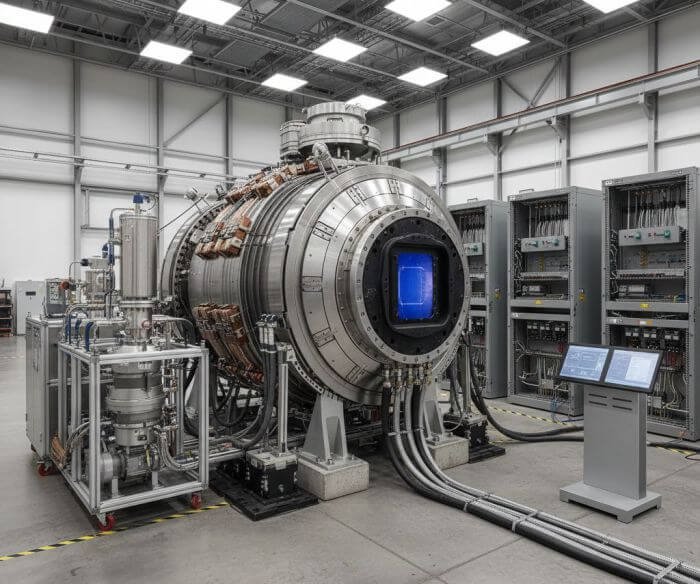
Grid interconnection also steers design. A plant must match regional voltage standards, fault handling rules, and variable demand cycles without burdening nearby substations. Siting near industrial parks or transmission corridors can lower infrastructure spending but may raise land and permitting costs. A fusion device tied to atmospheric nitrogen must therefore align its economic profile with available infrastructure rather than rely on marginal gains from exotic layouts.
This economic framing clarifies where capital pressure concentrates and how viability shifts as plants scale. Financial resilience for nitrogen fusion depends on a blend of durable components, predictable maintenance cycles, and integration choices that reduce long lead expenses without sacrificing performance targets.
Everything here is free. Readers are the reason it stays that way.
I make all of it alone, with no ads. If it is worth a coffee a month to you, that keeps the next one coming.
Keep it alive →System Operation From Air Intake To Fuel Output
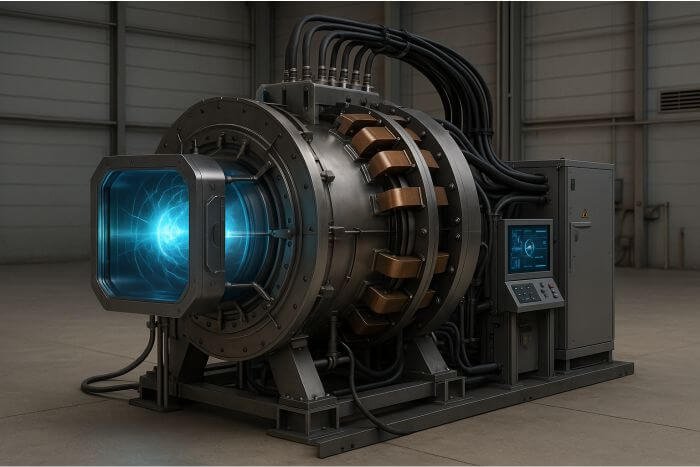
A nitrogen fusion device moves through clear operational stages that join air handling, plasma physics, control logic, and user interaction. Each stage must remain stable under varying ambient conditions while feeding the fusion core with controlled flows and then routing energy outward in predictable formats.
Air Handling, Nitrogen Separation And Pre Fusion Staging
Ambient air arrives with shifting humidity, dust, and trace gases that need removal before any confinement step. A front end block filters particulates, dries the intake stream, and routes it toward separation modules that isolate nitrogen at required purity bands. Equipment may switch between cryogenic, adsorption, or membrane techniques depending on regional temperature swings and power budgets.
Compression then raises pressure to feed buffer volumes that shield downstream hardware from rapid shifts in intake quality. Pre fusion staging may adjust isotopic composition or inject stabilising trace gases that help tune plasma behaviour. Separation and staging therefore set the conditions under which the fusion core sees a consistent feed, decoupled from short term environmental variability.
Fusion Core, Control Systems And Power Management
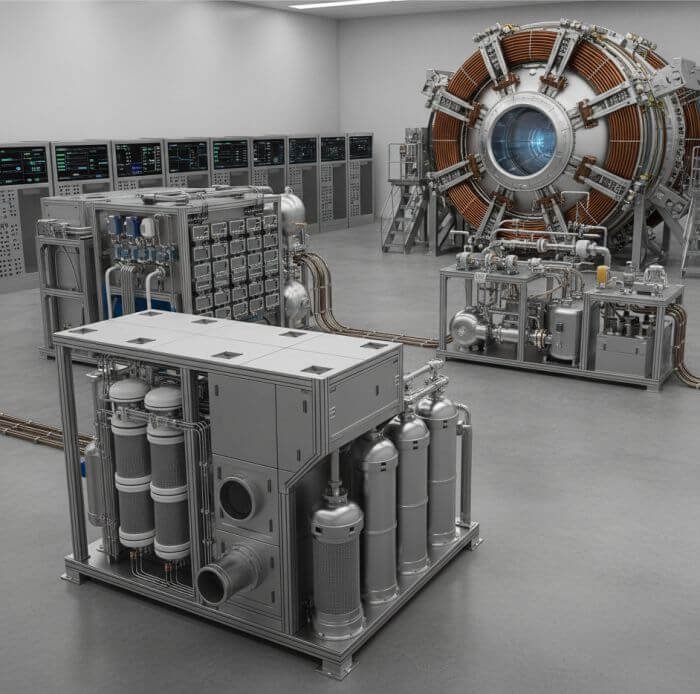
A fusion chamber operates at temperatures and field strengths that demand synchronised control across magnets, injectors, and feedback loops. Plasma shape, density, and impurity load all move within tight ranges, and departures trigger protective sequences that modulate heating or adjust magnetic geometry. Long pulses need continuous monitoring to suppress instabilities that would otherwise disrupt confinement.
Power management links the energy pulse of fusion reactions to steady flows in turbines, thermal stores, or conversion blocks. High speed conditioning smooths fluctuations and guards equipment against transient overshoots. Controls must respond at different timescales, from microsecond plasma corrections to minute scale adjustments in energy export, keeping the entire system aligned with operational set points.
UX Layers, Operator Interaction And System Feedback
Operator consoles combine alarms, trending tools, and predictive views of component health. A clear layout reduces cognitive load by presenting thermal margins, field stability, and intake quality without overwhelming the user. Training modes allow operators to rehearse response sequences with simulated plasma events and staged hardware faults.
System feedback works through layered notifications, giving early signals about drift in intake purity or rising impurity levels in the plasma state. Low friction interfaces limit navigation steps in emergency contexts and let operators focus on stabilisation tasks rather than menu traversal. User experience design therefore anchors safe and efficient interaction by exposing the right data at the right moment without burying operators in noise.
Operational stages from intake to fusion to fuel export
| Intake Systems | Fusion Operations | Output Integration |
|---|---|---|
| Air handling | Filtration and separation | Intake quality control |
| Fusion core | Confinement and reaction | Power extraction pathways |
| Energy export | Conversion and routing | Grid or process integration |
Operational continuity depends on how reliably each stage hands stable conditions to the next. Every operational block feeds the next, and the coherence of those junctions determines how reliably a nitrogen fusion plant can run under real world constraints.
Performance Envelope And Scalability Limits
A nitrogen fusion platform carries clear performance gains in targeted domains, yet its strengths taper once plant size, network coupling and environmental constraints begin to dominate system behaviour.
Where Nitrogen Fusion Fuels Excel
High energy density, sharp controllability and low marginal cost shape the strongest parts of the performance envelope. Plants can run at high capacity factor with rapid ramp rate shifts that accommodate variable demand without large thermal inertia penalties. Compact fuel logistics and minimal long lived byproducts add further appeal for regional grids that need predictable baseload with flexible output bands.
Scaling Behaviour, Bottlenecks And Systemic Limits
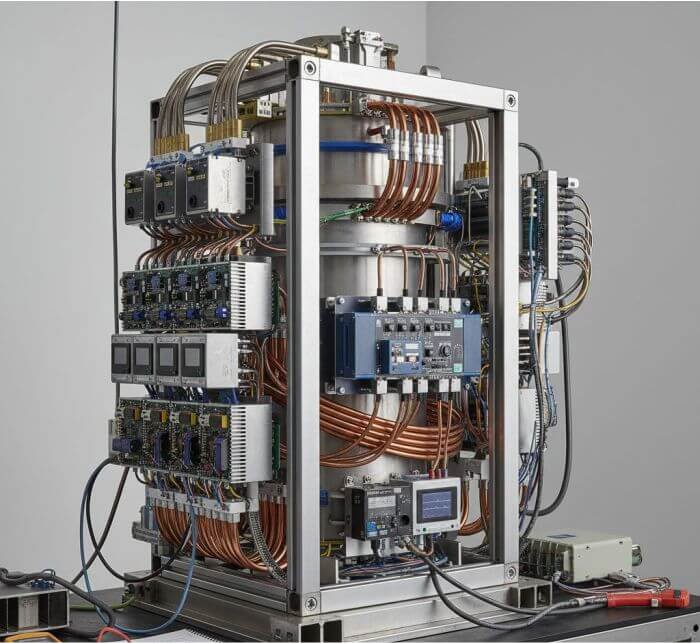
Attractive unit performance fades as installations grow because grid stability becomes sensitive to aggregated ramp rates, intake flow coordination and cumulative waste heat routing. Small plants manage local intake and heat rejection with modest infrastructure, but larger deployments encounter harder constraints that resist optimisation. Intake purity and compressor staging scale poorly beyond a threshold, and thermal management corridors tighten as urban sites try to disperse heat into limited air or water sinks.
Network level limits raise further barriers since simultaneous ramp events across multiple plants can strain balancing markets and force operators into more rigid dispatch patterns. Large clusters may also face nitrogen supply rhythm mismatches when seasonal air density swings hit separation efficiency. A fusion platform can outperform many alternatives in isolated nodes, yet systemic friction grows when dozens of units push against environmental and grid constraints.
A clear pattern emerges around scale sensitivity. Performance remains strong at moderate plant counts, then narrows as infrastructure and environmental ceilings begin to shape the feasible operating range.
Where Nitrogen Fusion Fuels Could Be Deployed
Deployment patterns vary widely because nitrogen fusion fuels can anchor heavy infrastructure or operate through compact units where transport links or local grids remain thin.
Grid Scale, Industrial And Megaproject Use Cases
A regional power hub is a useful entry point since it binds dense load, thermal demand and stable intake logistics. Steel plants and cement clusters benefit from high temperature output without long reheating cycles, while desalination complexes could run extended shifts that match local water demand curves.
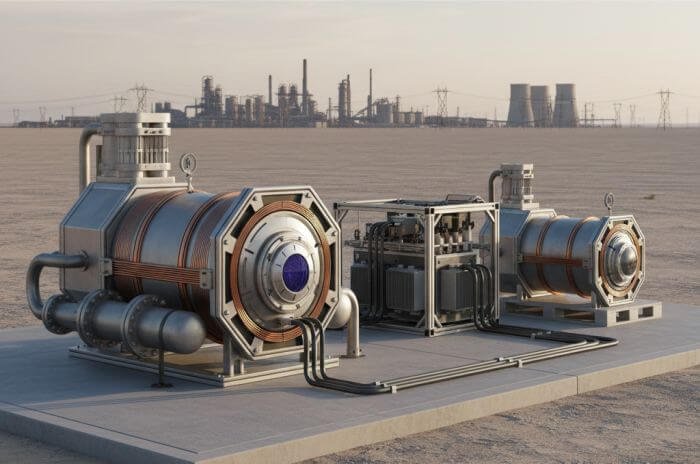
Several sectors illustrate how scale shapes viability. Large grid nodes gain from baseload power with fast modulation bands, which helps cities balance demand after solar drop offs. Heavy industry can align long furnace cycles with controlled output ramps, reducing fuel switching downtime. Megaprojects such as cross desert pipelines or orbital launch complexes fit the model when their energy draw stays concentrated around fixed anchor points rather than scattered loads.
Mobile, Remote And Off Planet Scenarios
Remote microgrids need compact modules that tolerate intake fluctuations created by altitude or weather. Communities far from transmission corridors can stabilise local supply without long fuel transport chains, and mobile platforms gain flexibility when their duty cycles shift across seasons or terrain.
Space infrastructure adds a different layer of demands. Orbital stations and deep space missions require reactors that operate with limited maintenance windows and predictable heating profiles, which suits modular nitrogen fusion units that avoid bulky propellant storage. Surface outposts can run small clusters for habitat support, balancing energy density with payload limits.
Compact units open a wider geographic footprint for nitrogen fusion derived energy without displacing the heavy fixed installations that anchor national grids.
Scientific Unknowns That Shape Design Choices
Open physics questions around nitrogen fusion shape design space more than component engineering, since unresolved mechanisms can alter stability targets and efficiency thresholds in ways that propagate across confinement, materials and modelling pipelines.
High Impact Unknowns In Nitrogen Fusion Science
What cross section behaviour emerges under extreme density and tailored field geometries remains unanswered, and the absence of firm data forces developers to span wide parameter bands when estimating reaction yield. Plasma instabilities could follow patterns that differ from hydrogen based systems, which complicates predictions of confinement time and heat flux distribution. High energy materials may react unpredictably to mixed neutron and charged particle spectra, feeding uncertainty into first wall longevity and coolant selection. Computational modelling helps bracket feasible regimes, yet a lack of empirical anchors leaves broad error margins around stability maps and efficiency expectations.
A clearer picture of reaction pathways and confinement behaviour would narrow design assumptions and tighten the ranges that guide next generation prototypes.
Safety, Governance And Societal Exposure
Operational risk shapes public tolerance for nitrogen fusion fuel facilities, since unplanned energy release or containment loss can generate local shocks that stretch emergency systems. Public confidence depends on clear governance rules and transparent oversight, which anchor expectations around reliability and long term exposure.
Safety Envelopes, Failure Modes And Emergency Planning
Containment loss presents a fast moving threat because plasma excursions can erode internal surfaces and trigger rapid thermal transfer to adjacent systems. Chemical spillover from high temperature loops adds another vector for acute harm when coolant lines fracture under stress. Worker zones need layered isolation boundaries that account for both radiant flux and particulate ejection during fault conditions.
A slower rhythm emerges once immediate hazards are stabilised. Facility operators must map out recovery sequences that integrate ventilation control, high energy materials handling and pressure vessel inspection. Insurance carriers will expect clear evidence that emergency drills align with the local safety case and that offsite responders can manage cross boundary effects such as air handling contamination.
Regulation, Licensing And Cross Border Governance
Licensing frameworks must track how a plant scales output, since shifts in energy density can alter compliance thresholds.
Extended operation underlines the need for harmonised rules that govern inspection cycles, data transparency and long term liability. International standards set out by technical agencies establish a shared vocabulary for core risk parameters, while a regulatory sandbox can help authorities monitor early deployments without prematurely locking in rigid constraints. Public consultation supports acceptance by clarifying exposure pathways, allowing communities to shape oversight tools around local conditions.
The View From NoSuchDevice
A nitrogen-fusion fuel program sits at an awkward intersection of ambition, physics discipline and economic pressure. From a purely technical angle, the idea carries appeal because atmospheric intake removes logistics from the energy equation. A reactor that draws feedstock from ambient air simplifies supply chains and cuts geopolitical friction. Yet the path from concept to field-ready unit depends on reaction behaviour that has not been mapped, cost curves that remain speculative and materials science that may or may not tolerate long duty cycles.
Economic logic hinges on two pivot points. If confinement and reaction yield rise to levels that rival hydrogen fusion while keeping plant footprints compact, capital intensity becomes manageable and long-term price signals look stable for utilities. If not, the system drifts toward niche deployments where high density energy is worth a premium. Market adoption also relies on predictable insurance models, since liability bands could expand sharply until regulators trust the safety case.
From a developer’s seat, the idea earns curiosity rather than immediate commitment. It invites targeted research, not broad industrial rollout. A lean set of experiments around cross section behaviour, confinement stability and materials fatigue would reveal whether the concept belongs on a national roadmap or stays in exploratory territory.
You read the whole thing.
That is rarer than it should be, and it is the exact kind of attention I built this archive for. I make every piece alone, with no ads and no investor deciding what gets written. If you want the next machine taken apart like this one, you can help me make it.
A coffee a month is enough to keep it free for everyone.
Prefer crypto or a one time gift? Other ways to give →
FAQ
What makes nitrogen fusion harder to model than more familiar fusion fuels?
Reaction channels for nitrogen are sparse in experimental literature, so cross section estimates often rely on extrapolated theory. That gap limits confidence in confinement targets, heating profiles and material loading forecasts, which slows progress compared with fuels backed by decades of empirical data.
How does nitrogen fusion compare conceptually with aneutronic fusion goals?
Nitrogen reactions sit in a middle zone where neutron output may fall below classic fusion fuels yet not approach fully aneutronic behaviour. That balance affects shielding strategy, power handling architecture and long term component fatigue, making the pathway distinct from both neutron-rich and low-neutron approaches.
Could atmospheric abundance alone justify pursuing nitrogen as a fuel candidate?
Abundance removes supply constraints, but viability depends on whether reaction thresholds, confinement demands and heat extraction pathways converge toward manageable engineering. Without alignment across those factors, cheap feedstock cannot offset the energy and infrastructure required to drive fusion with a heavier nucleus like nitrogen.