



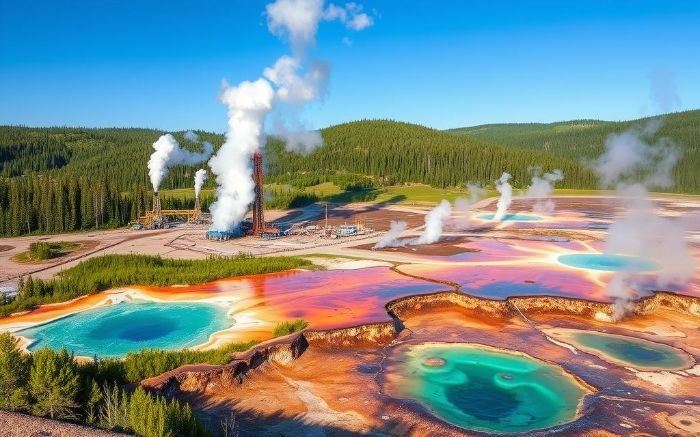
What if the key to a sustainable future lies beneath our feet? Geothermal energy uses the Earth’s natural heat. It’s a great alternative to fossil fuels and a key renewable energy source. By using this energy, we can cut down on greenhouse gas emissions and meet our energy needs.
In this article, we’ll dive into the world of geothermal energy. We’ll see how the Earth’s heat is used, its many uses, and its bright future in clean energy.
Key Takeaways
- Geothermal energy is a renewable energy source derived from the Earth’s internal heat.
- The U.S. has the potential for up to 60 gigawatts of geothermal electricity-generating capacity by 2050.
- Geothermal systems display significantly lower emissions compared to traditional energy sources.
- The U.S. Department of Energy is focused on advancing geothermal technologies to unlock more resources.
- Over 3,300 megawatts of geothermal capacity is currently installed in the U.S., primarily in California.
- Geothermal plants can provide continuous baseload electricity, comparable to coal and nuclear power.
- The future of geothermal energy looks promising with potential innovations and increased global resources.
Table of Contents
What is Geothermal Energy?
Geothermal energy is the heat from the Earth. It can be used for many things. This heat comes from the Earth’s core, where radioactive materials decay.
This energy can power homes, generate electricity, or even help with fun activities like hot springs.
Definition and Overview of Geothermal Energy
Geothermal energy uses heat from under the Earth. This heat is found in layers of the Earth. The deeper you go, the hotter it gets.
In the U.S., the biggest producer of geothermal energy, new projects are making this resource even better.
How Earth’s Internal Heat is Generated
The Earth’s heat comes from radioactive decay in rocks. This process heats the core and affects the surface. Volcanoes help move this heat to the surface.
This makes it possible for geothermal power plants to turn this natural heat into clean energy.
The Science Behind Geothermal Energy Extraction
Geothermal energy extraction uses the Earth’s heat. It involves thermal gradients and heat transfer. These are key to getting energy from the Earth.
Understanding Thermal Gradients in the Earth’s Crust
Thermal gradients show how temperature changes with depth. They vary, especially in volcanic areas. This is where geothermal resources are plentiful.
Places like The Geysers in California show how well it works. Wells are drilled to different depths. They bring up hot water and steam for power and heat.
How Heat is Transferred from Below the Earth’s Surface
Heat moves through conduction, convection, and sometimes radiation. Wells help extract hot water or steam. The rocks’ natural holes or added ones help fluids move.
This movement is key for heat to be turned into energy. It shows how geothermal resources are connected.
Types of Geothermal Energy Systems
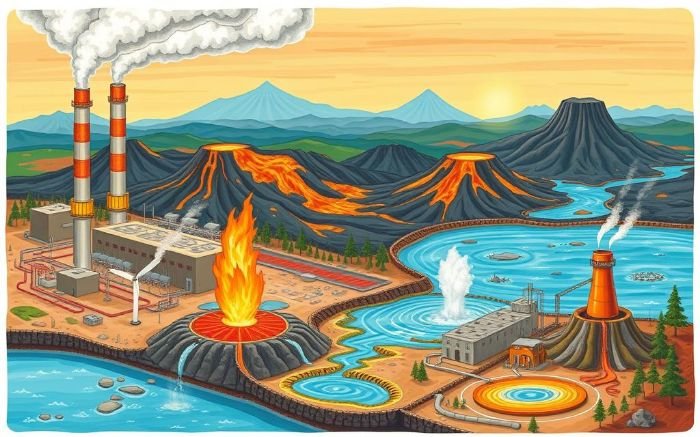
Geothermal energy systems are divided into different types. Each type uses the Earth’s heat in its own way. Knowing about these systems helps us see how they work in different places and meet different energy needs.
Dry Steam, Flash Steam, and Binary Cycle Power Plants
There are three main types of geothermal power plants:
- Dry steam power plants – These use steam straight from the Earth. They are very cost-effective where steam is plentiful.
- Flash steam power plants – These plants use high-pressure hot water to make steam. They need more water than the others.
- Binary cycle technology – This technology lets plants use heat from lower-temperature geothermal resources. It’s a big step forward.
Direct Use Applications and Ground Source Heat Pumps
Geothermal energy is not just for making electricity. It’s also used for heating in many ways. This includes:
- Heating homes and buildings.
- Keeping greenhouses warm all year.
- Helping with farming, like fish farming.
Geothermal heat pumps also use the Earth’s stable temperatures. They move water or antifreeze through underground pipes. This makes buildings warmer in winter and cooler in summer, saving a lot of energy and money.
The Process of Geothermal Power Generation
The geothermal power generation process starts by tapping into the Earth’s heat. This heat is key for making energy. It involves getting steam or hot water from deep beneath the Earth.
This thermal energy then goes through changes to become electricity. This makes it possible to use the Earth’s heat for power.
How Heat is Converted into Usable Energy
First, geothermal energy uses steam or hot water from the Earth. This fluid is either used straight away to power turbines or turned into steam. This step is crucial for turning geothermal energy into electricity.
The energy change is important for getting the most power from geothermal sources. The process usually goes like this:
- Getting geothermal fluid.
- Using steam to power turbines in geothermal plants.
- Changing mechanical energy into electrical energy with generators.
The Role of Turbines in Power Generation
Turbines in geothermal plants are key for turning geothermal energy into electricity. The steam from deep underground makes the turbines spin. This spinning drives generators to make electricity.
There are many types of turbines, like back-pressure, condensing, or hybrid ones. Each type works best with different geothermal systems. This variety helps improve efficiency and power output.
Everything here is free. Readers are the reason it stays that way.
I make all of it alone, with no ads. If it is worth a coffee a month to you, that keeps the next one coming.
Keep it alive →Benefits of Geothermal Energy
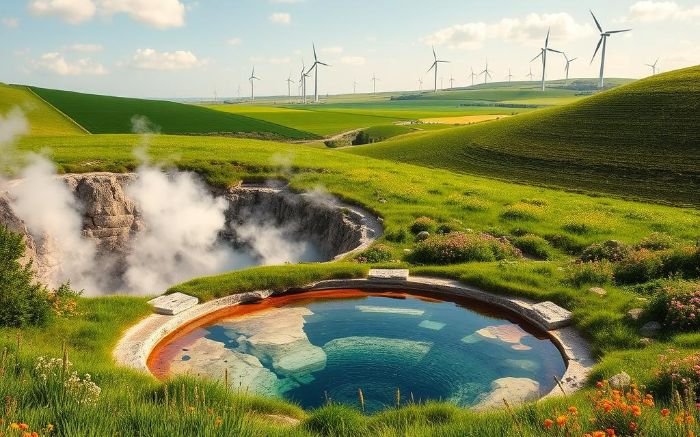
Geothermal energy is a clean and reliable source of power. It uses heat from the Earth’s core. This makes it sustainable and helps with energy stability.
Renewable and Sustainable Energy Source
Geothermal energy is gaining popularity because it’s sustainable. Its power plants work well and last long. By 2050, it could power 8.5% of U.S. electricity.
Low Emissions and Environmental Impact
Geothermal energy has low emissions. Modern plants mainly release steam, not pollution. This helps the environment a lot.
Using geothermal energy can cut down on greenhouse gases. It’s good for heating and cooling. Plus, it fits well with current systems.
Challenges in Geothermal Energy Utilization
Geothermal energy is a green solution for our energy needs. But, it faces many challenges. These include geographic limits and hard-to-reach places. Knowing these problems helps those wanting to use this clean energy.
Geographic Limitations and Accessibility
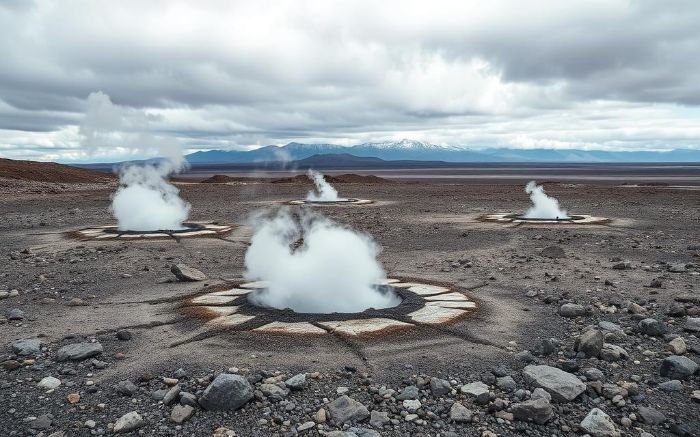
Geothermal resources are not spread out evenly worldwide. Only a small part of the land has the right conditions for geothermal energy. These areas are often near volcanoes and earthquakes, making it risky.
Getting to these places to drill is hard. This makes it tough to use geothermal energy.
Initial Costs and Infrastructure Requirements
Starting a geothermal project costs a lot more than traditional energy. You need to drill wells and set up tech. The location can also raise costs due to logistics and tech needs.
The US has trouble using geothermal power because of high costs. Without enough money and the right setup, moving to geothermal energy is hard.
Future of Geothermal Energy
The future of geothermal energy looks bright. New systems and global growth are leading the way. Enhanced Geothermal Systems (EGS) are key, unlocking new resources. They aim to make geothermal energy a strong player in the world’s energy mix.
Innovations in Geothermal Technology
Recent U.S. Department of Energy research could boost geothermal power big time. By 2050, it might jump 26 times, hitting 8.5% of U.S. electricity. The Wells of Opportunity (WOO) program is exploring oil and gas wells for geothermal use. It’s a step towards energy independence and sustainability.
Potential for Global Expansion of Geothermal Resources
Countries are turning to geothermal energy for a green future. In Europe, IRENA predicts a huge jump in geothermal power by 2050. Colorado is also pushing growth. These efforts will make geothermal a reliable source for heating, cooling, and power all year.
You read the whole thing.
That is rarer than it should be, and it is the exact kind of attention I built this archive for. I make every piece alone, with no ads and no investor deciding what gets written. If you want the next machine taken apart like this one, you can help me make it.
A coffee a month is enough to keep it free for everyone.
Prefer crypto or a one time gift? Other ways to give →
FAQ
What is geothermal energy?
Geothermal energy is heat from the Earth’s core. It’s used for electricity, heating, and cooling. It’s a green energy source that helps reduce harmful emissions.
How is heat generated within the Earth?
The Earth’s heat comes from radioactive rocks deep inside. The heat gets hotter as you go deeper, making geothermal energy possible.
What are thermal gradients, and why are they important?
Thermal gradients are how temperature changes with depth in the Earth. They’re steeper near volcanoes, making it easier to find and use geothermal energy.
What types of geothermal power plants are there?
There are three main types of geothermal power plants. Dry steam plants use steam directly. Flash steam plants use high-pressure hot water. Binary cycle plants use a different fluid to make electricity.
What are direct use applications of geothermal energy?
Direct use applications use hot water for heating. This includes warming buildings, greenhouses, and even fish farms. It shows how versatile geothermal energy is.
How is geothermal energy converted into electricity?
First, hot water or steam is extracted. Then, it turns into mechanical energy through turbines. Finally, generators turn this energy into electricity, making the most of geothermal resources.
What are the environmental benefits of geothermal energy?
Geothermal energy is very clean, with little greenhouse gas emissions. It uses less water and land than other energy sources.
What are the challenges associated with geothermal energy?
Challenges include finding suitable locations and dealing with geological issues. These can make some projects hard to start.
What is the future of geothermal energy?
The future looks bright with new technologies like Enhanced Geothermal Systems (EGS). As tech improves, geothermal energy can grow, helping meet energy needs sustainably.