





What Is Acetogenesis?
Acetogenesis is the microbial conversion of intermediate fermentation products into acetate, carbon dioxide, and hydrogen. In anaerobic digestion it usually refers to syntrophic bacteria that process compounds such as propionate, butyrate, or ethanol into forms methanogens can use. A useful shorthand is intermediates -> acetate + CO2 + H2, highlighting acetate as the key product of the stage.
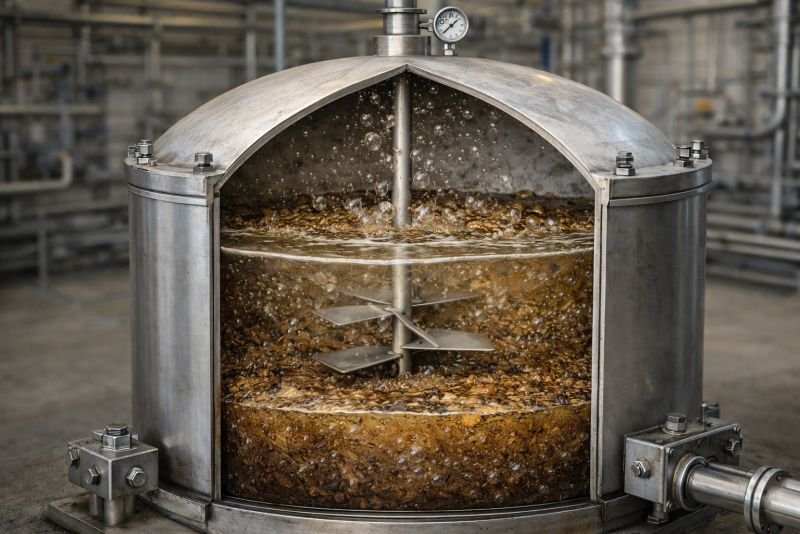
In real reactors, acetogenesis works only when hydrogen is removed fast enough by neighboring organisms, because many of its reactions are thermodynamically marginal. In biogas process thermodynamics, this makes local microbial cooperation as important as bulk chemistry. Used in devices include anaerobic digesters, fermentation reactors, waste-to-gas systems, and staged bioprocessing units.
The term matters because acetate is a central metabolic currency in oxygen-free energy conversion. If acetogenesis slows, acids accumulate, hydrogen partial pressure rises, and downstream methane production declines even when plenty of organic matter remains in the reactor.
Researchers track acetogenesis through acetate concentration, hydrogen partial pressure, volatile fatty acid ratios, and community analyses that reveal whether syntrophic pathways are functioning under the chosen operating conditions. These measurements also show whether reactor mixing and loading are supporting the required microbial partnership.
Example:
In a stable digester, acetogenesis converts propionate-rich intermediates into acetate that methanogens can use for methane formation.
Related Terms:
NoSuchDevice is a free archive of machines that do not exist yet but already have a shadow in physics. I research and write every entry alone, with no ads. Take a look around the archive, or help keep it free.