


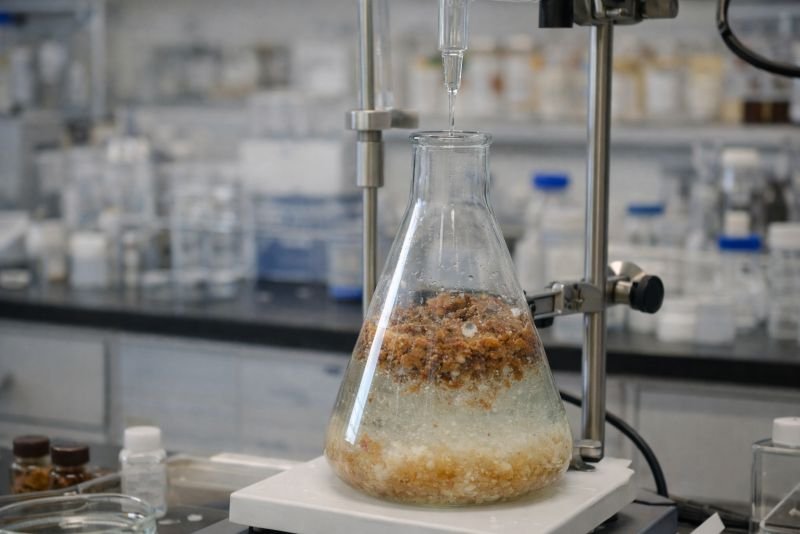
What Is Hydrolysis?
Hydrolysis is a chemical reaction in which water breaks a covalent bond and splits a larger molecule into smaller fragments. In biological systems it is usually enzyme-driven, allowing polymers such as proteins, fats, and carbohydrates to become soluble building blocks. A simple representation is AB + H2O -> A-H + B-OH, which shows water participating directly in bond cleavage.
In real bioprocesses, hydrolysis controls how fast complex feedstocks become available to microbes or catalysts downstream. In anaerobic digestion biochemistry, it converts cellulose, proteins, and lipids into sugars, amino acids, and fatty acids that later stages can consume. Used in devices include biogas digesters, enzymatic reactors, biomass pretreatment systems, and wastewater treatment trains.
The term matters because many conversion systems are limited not by final product formation but by how quickly complex matter is opened up first. Tough feedstocks with lignin, crystalline cellulose, or protective membranes resist hydrolysis, which lowers overall throughput, delays gas formation, and makes reactor design, mixing, and residence time more important.
Engineers track hydrolysis through soluble chemical oxygen demand, released sugars, lipid breakdown, and enzyme activity. These measurements show whether poor performance comes from inaccessible substrate or from a later microbial bottleneck.
Example:
In a food-waste digester, slow hydrolysis of fibrous material can delay methane production even when later microbial stages are healthy.
Related Terms:
NoSuchDevice is a free archive of machines that do not exist yet but already have a shadow in physics. I research and write every entry alone, with no ads. Take a look around the archive, or help keep it free.