




What Is Addition Polymer?
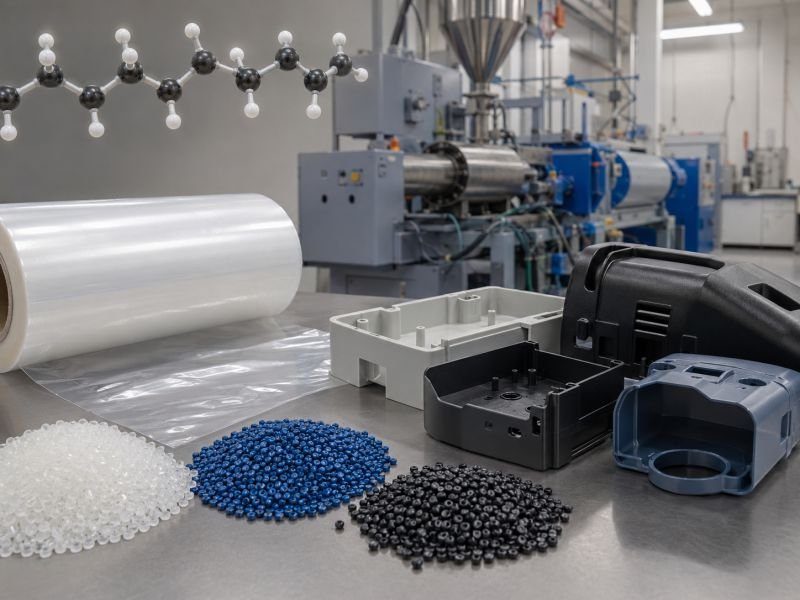
An addition polymer is a macromolecule formed when unsaturated monomers, usually containing carbon-carbon double bonds, add to a growing chain without releasing a small byproduct. Polyethylene, polypropylene, and polystyrene are common examples. A simple chain relation is DP = Mn / M0, where degree of polymerization links average molecular mass to repeat-unit mass.
In real systems, the carbon-carbon backbone gives these materials strong chemical resistance and makes them useful for packaging, insulation, structural housings, and molded consumer parts. Used in devices include cable jackets, battery casings, medical disposables, and appliance enclosures. Their stability is valuable in service, but it also limits low-temperature chemical breakdown routes after disposal.
The class matters because polymer architecture strongly affects recycling options, catalyst selection, and process energy demand. In thermal conversion of waste polyolefins, addition polymers usually require cracking at elevated temperature, producing hydrocarbon mixtures rather than neatly regenerated monomers.
Engineers therefore evaluate oxidation, branching, crystallinity, contaminant load, and additive history when predicting whether mechanical reuse, solvent purification, or pyrolysis is the more realistic recovery path for a given waste stream. Moisture exposure and repeated melt cycles also influence performance.
Example:
Polyethylene film from packaging remains chemically intact in water and often needs thermal cracking rather than hydrolysis for molecular recovery.
Related Terms:
NoSuchDevice is a free archive of machines that do not exist yet but already have a shadow in physics. I research and write every entry alone, with no ads. Take a look around the archive, or help keep it free.