





What Is Capacitance?
Capacitance is the ability of a system to store electric charge for a given change in voltage. It describes how strongly conductors and electric fields can hold separated charge without current continuing to flow. The basic relation is C = Q / V, where C is capacitance, Q is stored charge, and V is the potential difference. Geometry, material permittivity, and spacing between charged regions all influence the final value.
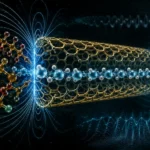
In real devices, capacitance appears in parallel plates, cables, semiconductor structures, and electrochemical interfaces. In electrostatic energy storage, very large surface area and extremely small charge separation can raise capacitance to unusually high values. Used in devices include timing circuits, touch sensors, filters, memory cells, and supercapacitors.
The concept matters because capacitance shapes how systems respond to changing voltage. It controls smoothing in power supplies, sets time constants in RC networks, influences resonance with inductance, and determines how much energy can be buffered during fast electrical events. High capacitance can improve stability and pulse handling, but it also affects charging time, leakage, and physical size.
Engineers measure capacitance with bridge methods, impedance analysis, or charge-discharge tests across a defined frequency and temperature range. Those conditions matter because parasitic resistance, dielectric loss, and electrode structure can make the measured value differ from an ideal static number.
Example:
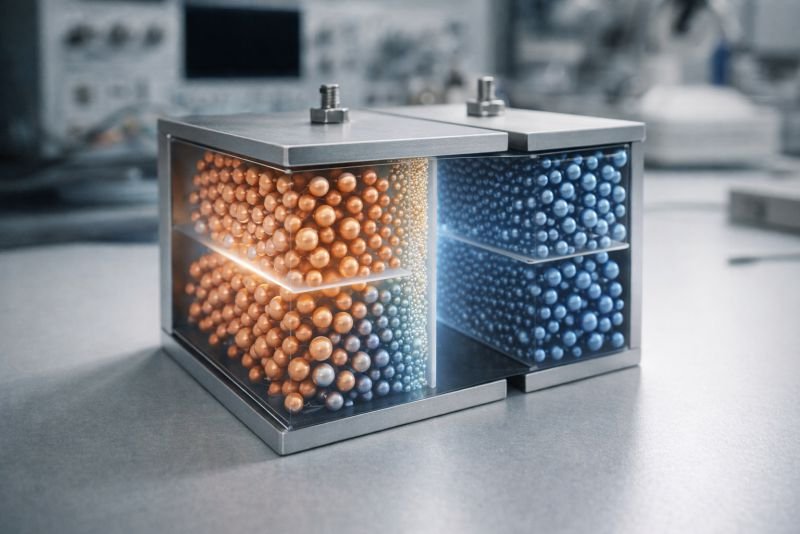
A supercapacitor module can reach thousands of farads because ions in the electrolyte form charge-separated layers across an enormous internal electrode surface.
Related Terms:
NoSuchDevice is a free archive of machines that do not exist yet but already have a shadow in physics. I research and write every entry alone, with no ads. Take a look around the archive, or help keep it free.