




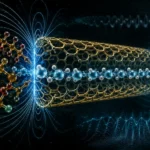


What Is Pseudocapacitance?
Pseudocapacitance is a charge-storage mechanism in which capacitance arises from fast, reversible electrochemical reactions at or near an electrode surface. Unlike pure electric double-layer storage, it involves electron transfer and ion interaction with the material, yet it still behaves more like a capacitor than a battery over much of its operating range. A common differential form is C = dQ / dV, showing capacitance as the change in stored charge with voltage.
In real materials, pseudocapacitance appears in metal oxides, conducting polymers, and some engineered carbons with redox-active surface groups. In advanced charge-storage interfaces, it adds extra charge beyond what simple ion adsorption can provide. Used in devices include hybrid supercapacitors, electrochemical sensors, backup power modules, and pulse-power systems.
The concept matters because it helps bridge the gap between traditional capacitors and batteries. By introducing rapid faradaic reactions without relying on slow bulk conversion, pseudocapacitive materials can raise energy density while preserving high power and long cycle life. The tradeoffs are often lower stability, narrower voltage windows, structural swelling, or reduced conductivity compared with purely carbon-based electrodes.
Engineers identify pseudocapacitance through cyclic voltammetry, galvanostatic charge-discharge profiles, and impedance measurements that separate surface-controlled behavior from diffusion-limited storage. These tests reveal whether a material behaves as a true high-rate capacitor or drifts toward battery-like kinetics.
Example:
A manganese oxide electrode can show pseudocapacitance by storing charge through rapid reversible surface redox reactions during repeated charging cycles.
Related Terms:
NoSuchDevice is a free archive of machines that do not exist yet but already have a shadow in physics. I research and write every entry alone, with no ads. Take a look around the archive, or help keep it free.