




What Is Ethylene Glycol?
Ethylene glycol is a small diol with two hydroxyl groups that make it a useful building block in polyester chemistry, heat-transfer fluids, and related industrial formulations. In PET manufacture, it reacts with terephthalic acid or related esters to form repeating chains. For PET recovery, a simple mass relation is m_EG = (62 / 192) x m_PET, estimating the theoretical ethylene glycol released per unit mass of polymer.
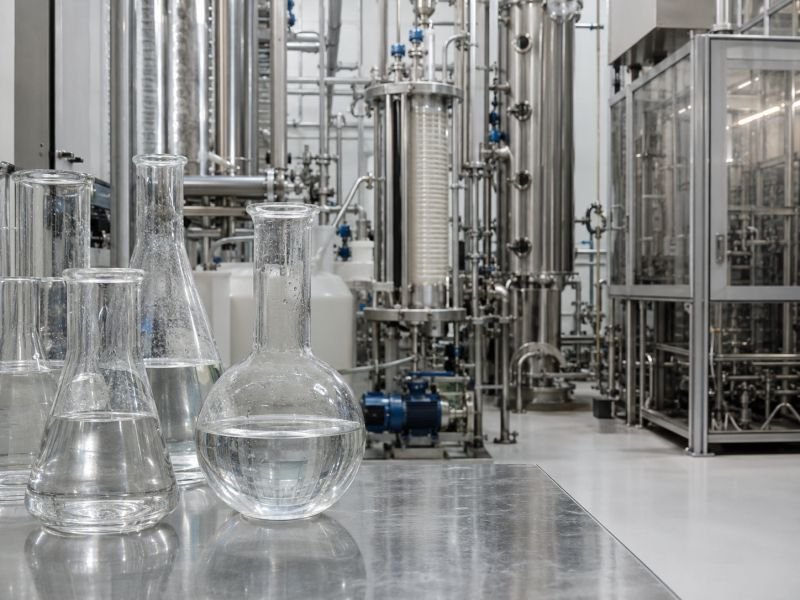
In real systems, ethylene glycol is a mobile liquid that mixes readily with water and is often recovered from reaction or hydrolysis streams by separation and purification steps. Used in devices include polyester synthesis reactors, distillation columns, coolant loops, de-icing systems, and PET recycling trains that collect soluble monomer products. It is a practical output in biological PET depolymerization systems because its recovery preserves chemical value that would otherwise be lost in thermal destruction routes.
The compound matters because many circular polymer pathways depend on recovering not just aromatic monomers but also the smaller diols that complete the resin recipe. Product purity strongly influences whether the recovered material can return to polymer-grade service.
Engineers therefore watch water content, contamination, and separation energy closely, since a technically successful depolymerization route is less useful if the recovered glycol is too dilute or impure for economical reuse.
Example:
A PET hydrolysis process can produce an aqueous stream from which ethylene glycol is separated and refined for polymer feed use.
Related Terms:
NoSuchDevice is a free archive of machines that do not exist yet but already have a shadow in physics. I research and write every entry alone, with no ads. Take a look around the archive, or help keep it free.