





What Is PETase?
PETase is an enzyme that hydrolyzes ester bonds in polyethylene terephthalate, or PET, splitting a durable polyester into smaller molecules that other enzymes or processes can handle more easily. It acts at the solid-liquid interface, where polymer surface accessibility strongly affects reaction speed. A common kinetic relation is v = Vmax[S] / (Km + [S]), linking substrate concentration to catalytic rate.
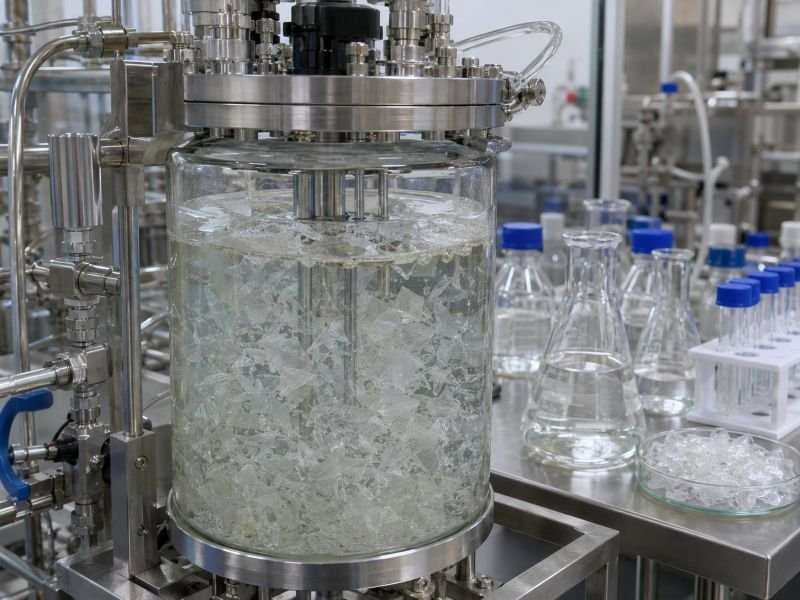
In real systems, PETase performance depends on temperature, pH, enzyme stability, crystallinity of the plastic, and how much surface area shredding creates before treatment. Used in devices include stirred enzyme reactors, pre-treatment wash lines, plastic slurry vessels, and analytical systems that track monomer release during depolymerization. Engineered variants are often tuned to remain active in biological PET recycling platforms operating above the temperature range of the wild enzyme.
The enzyme matters because it offers a selective route for taking PET apart without the high temperatures required by pyrolysis. Instead of turning the polymer into a mixed hydrocarbon output, PETase starts a pathway that can recover useful molecular feedstocks for reuse in polymer manufacturing.
Researchers therefore optimize active-site geometry, expression level, and thermal tolerance together, because faster catalysis is only useful when the enzyme also resists deactivation during long industrial runs.
Example:
Finely shredded PET film in a warm aqueous reactor can lose surface mass as PETase cleaves exposed ester bonds into soluble intermediates.
Related Terms:
NoSuchDevice is a free archive of machines that do not exist yet but already have a shadow in physics. I research and write every entry alone, with no ads. Take a look around the archive, or help keep it free.