






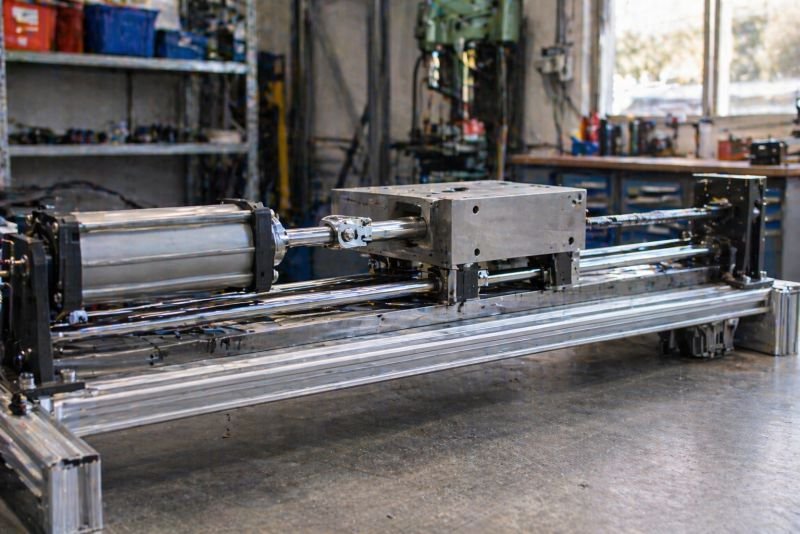
What Is Mechanical Work?
Mechanical work is the transfer of energy that occurs when a force causes displacement. In its simplest form, W = F d cos(theta), where the angle term shows that only the component of force aligned with motion contributes. Positive work adds energy to a system, while negative work removes it through resisting forces, braking, or controlled loading.
In engineering, the idea connects force measurements to real energy budgets. A jack lifting a mass, a motor driving a slider, and a pump pressurizing fluid all involve work even though the hardware differs. The same reasoning is used in vehicle-load interaction analysis, where wheel forces acting through small surface deflections can be translated into recoverable or dissipated energy.
The term matters because it links mechanics, power, and efficiency with one quantity that can be measured or calculated across many systems. Once work per cycle is known, engineers can estimate heating, storage needs, actuator demand, and conversion potential. Used in devices include presses, elevators, engine dynamometers, robotic actuators, and energy-harvesting mechanisms that turn applied force into controlled motion.
Example:
When a hydraulic lift raises a 500 kg platform through 2 meters, the lifting force performs mechanical work on the platform.
Related Terms:
NoSuchDevice is a free archive of machines that do not exist yet but already have a shadow in physics. I research and write every entry alone, with no ads. Take a look around the archive, or help keep it free.