





What Is Synthetic Biology?
Synthetic biology is the design and construction of biological systems with deliberately engineered functions, often by combining genetics, molecular biology, computation, and biochemical design. Rather than only observing natural pathways, it treats cells as modifiable platforms whose behavior can be redirected. A simple engineering relation is fold change = output_edited / output_baseline, which compares how strongly a designed change alters gene expression or pathway performance.
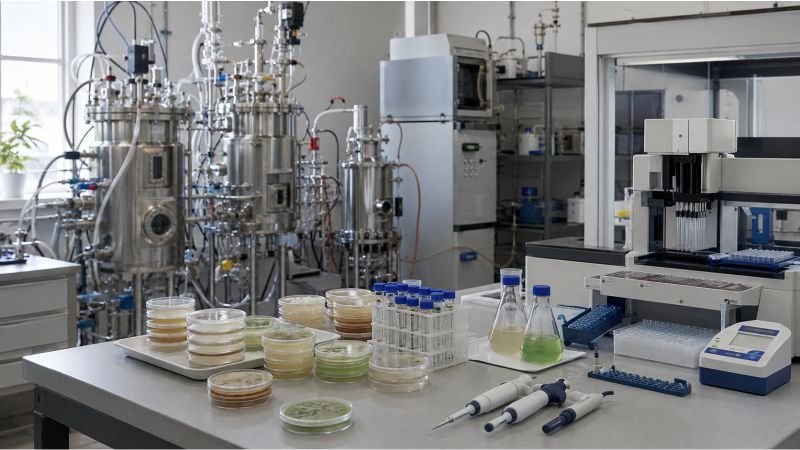
In real systems, synthetic biology is used to tune enzymes, redirect metabolism, install sensing circuits, and control how organisms allocate energy and carbon. Used in devices include bioreactors, biosensors, fermentation lines, diagnostic cartridges, and engineered recycling platforms where cells perform targeted chemistry under controlled conditions. It is central to programmable microbial recycling systems that need more than the slow baseline behavior found in wild organisms.
The field matters because many useful biological activities exist in nature only at low rates, narrow temperatures, or poorly controlled outputs. Synthetic biology provides the tools to change those limits without inventing entirely new chemistry from scratch.
Practical success depends on balancing pathway burden, genetic stability, and safety controls, since a strain that performs well in short experiments may lose function when grown for long industrial campaigns.
Example:
An engineered bacterial strain can be modified to overexpress a recycling enzyme while suppressing competing metabolic pathways.
Related Terms:
NoSuchDevice is a free archive of machines that do not exist yet but already have a shadow in physics. I research and write every entry alone, with no ads. Take a look around the archive, or help keep it free.