





What Is Polylactic acid?
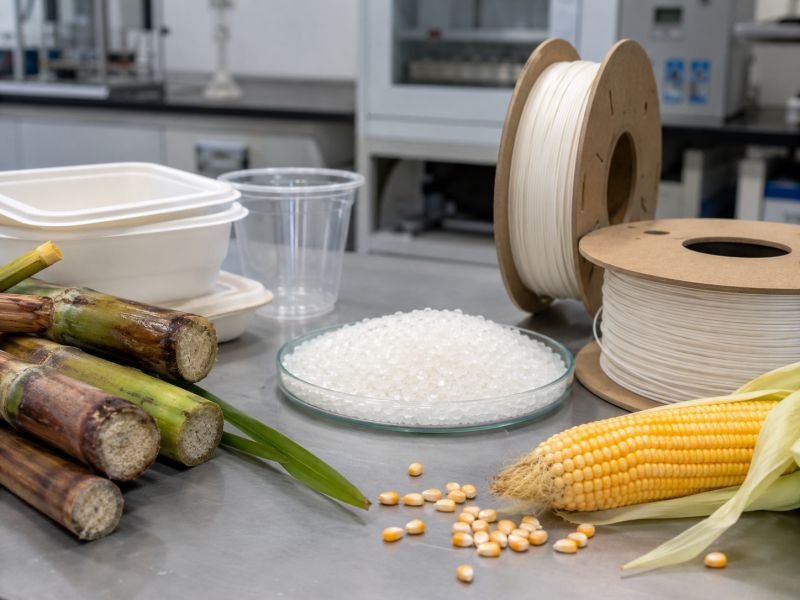
Polylactic acid is a bio-based thermoplastic polyester made from lactic acid derived from fermented sugars such as corn starch or sugarcane. It can be melt-processed into films, fibers, and molded parts using equipment similar to other thermoplastics. A common relation is Xc = DeltaHm / DeltaHm0, which links measured melting enthalpy to polymer crystallinity.
In real use, PLA offers good stiffness and respectable tensile strength, but its performance changes quickly near its glass transition range. Heat exposure, moisture, molecular weight, and crystallinity all influence brittleness, dimensional stability, and processing behavior. Used in devices include disposable packaging, filament spools, food-service items, prototype housings, and medical support parts designed for moderate temperatures.
The material matters because it shows how renewable feedstocks can enter mainstream polymer processing without abandoning established forming methods. It is also relevant in bio-based polymer engineering, where lower fossil carbon input is valuable only if the final part still meets thermal and mechanical requirements.
Engineers therefore track heat resistance, crystallization behavior, and hydrolytic aging carefully, since a formulation that works well at room temperature may soften or distort in warm service conditions.
Example:
A PLA container can remain rigid on a shelf at room temperature yet deform if left in a hot parked car.
Related Terms:
NoSuchDevice is a free archive of machines that do not exist yet but already have a shadow in physics. I research and write every entry alone, with no ads. Take a look around the archive, or help keep it free.