




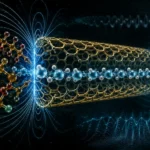


What Is Quantum Dot?
A quantum dot is a nanoscale semiconductor crystal whose electrons and holes are confined strongly enough that its optical and electronic properties depend on particle size. Because the crystal is only a few nanometers across, it behaves more like an artificial atom with discrete allowed energy states than a bulk solid.
In quantum-dot photovoltaic engineering, films of these nanocrystals act as light absorbers whose response can be adjusted by controlling diameter and surface chemistry. Their tunability comes from Quantum Confinement, which changes absorption windows without changing the underlying material family.
A compact way to describe the trend is E_eff = E_bulk + k / d^2, so smaller dots usually have larger effective bandgaps. Why it matters is that mixed dot sizes can target different parts of the solar spectrum and may enable effects such as multiple exciton generation in advanced photovoltaic devices.
Used in devices include quantum dot solar cells, quantum dot displays, and fluorescence imaging probes. Performance depends strongly on surface passivation and charge extraction because a large fraction of the atoms sit at the surface, where traps can waste absorbed energy before it reaches a circuit.
Example:
A solar film containing quantum dots of several sizes can absorb different wavelength bands more selectively than a single bulk semiconductor layer.
Related Concepts:
NoSuchDevice is a free archive of machines that do not exist yet but already have a shadow in physics. I research and write every entry alone, with no ads. Take a look around the archive, or help keep it free.