





What Is Stereocomplex PLA?
Stereocomplex PLA is a form of polylactic acid created when left-handed and right-handed PLA chains associate into a denser crystal structure than either form makes alone. The pairing increases intermolecular packing and raises thermal resistance compared with ordinary PLA. A useful comparison is Tm_sc > Tm_homo, where the stereocomplex melting point exceeds that of standard PLA crystals.
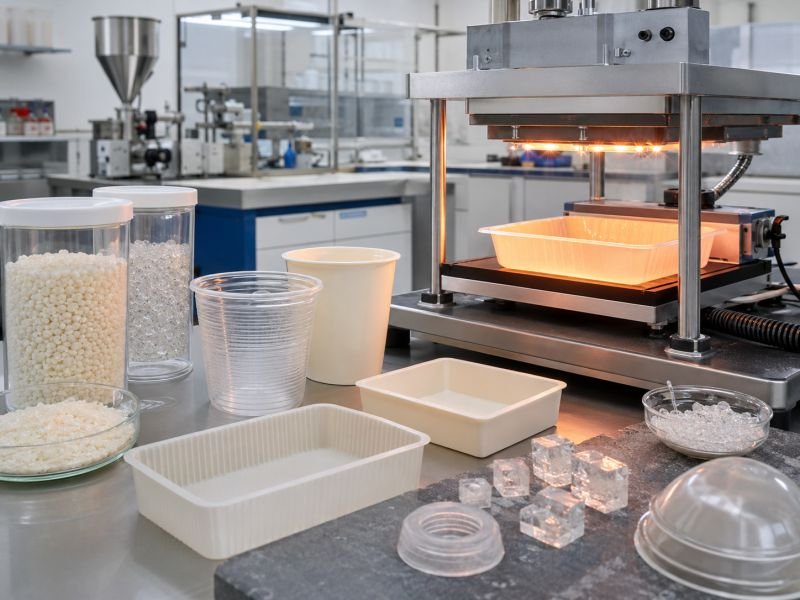
In real materials, this structure forms only when stereochemistry, mixing conditions, and crystallization history are controlled carefully during processing. The resulting polymer can tolerate higher service temperatures and hold shape better than conventional PLA under the same heat load. Used in devices include hot-fill packaging, heat-tolerant foodware, molded consumer parts, medical components, and specialty fibers where standard PLA would soften too early. This makes it relevant in high-temperature bioplastic materials design.
The structure matters because it shows that polymer performance can be changed not only by switching chemistry, but by controlling how chains of the same chemistry arrange and crystallize. That opens a route to better heat resistance while staying within a bio-based polyester platform.
Commercial use remains challenging because stereoregular feedstocks, processing control, and added cost all affect whether the improved thermal performance justifies the more complex manufacturing route.
Example:
A stereocomplex PLA container can retain its shape in a hot-fill process that would distort an ordinary PLA cup.
Related Terms:
NoSuchDevice is a free archive of machines that do not exist yet but already have a shadow in physics. I research and write every entry alone, with no ads. Take a look around the archive, or help keep it free.