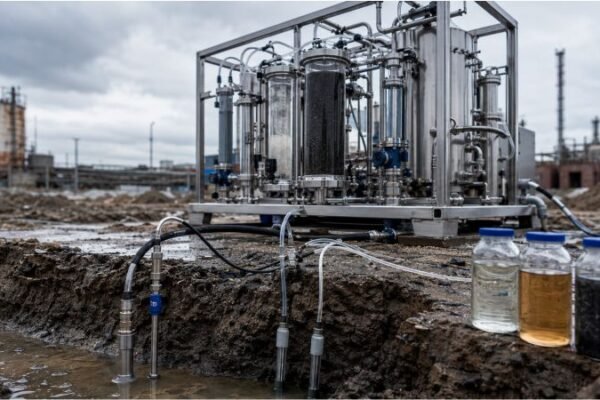






Field treatment system with stainless reactors, groundwater sampling lines, contaminated soil, and water samples at an industrial remediation site

Nanotechnology in Environmental Remediation – When the Cleanup Tool Is Smaller Than the Pollutant

Bitterfeld-Wolfen sits in the Saxony-Anhalt region of eastern Germany. For most of the twentieth century it was one of the most productive chemical manufacturing zones in Europe, producing dyes, pesticides, chlorinated solvents, and plastics at industrial scale. By the 1990s it was also one of the most contaminated places on the continent. Chlorinated compounds, heavy…

Read More
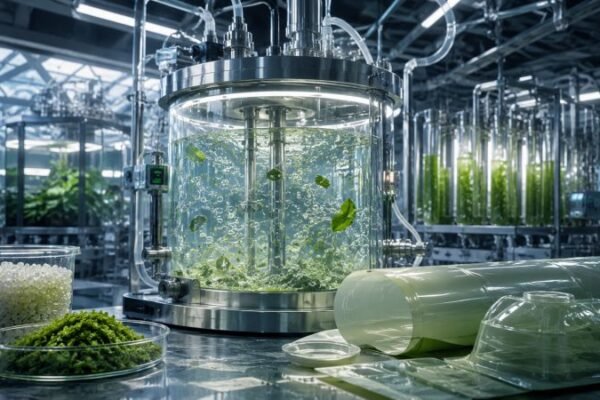
Algae-derived bioplastics production with green microalgae suspension, polymer pellets, and translucent PHA film samples in a clean lab

Algae-Derived Bioplastics – The Ocean Already Grows the Material That Could Replace Its Worst Pollutant

Eight million tonnes of plastic enter the ocean every year. The organisms that have lived in that ocean for three billion years are, in a specific biochemical sense, already synthesizing the answer. Certain microalgae produce polyhydroxyalkanoates – PHAs – as a routine metabolic function: long-chain polymer molecules with properties that chemists classify as biodegradable thermoplastics….

Read More
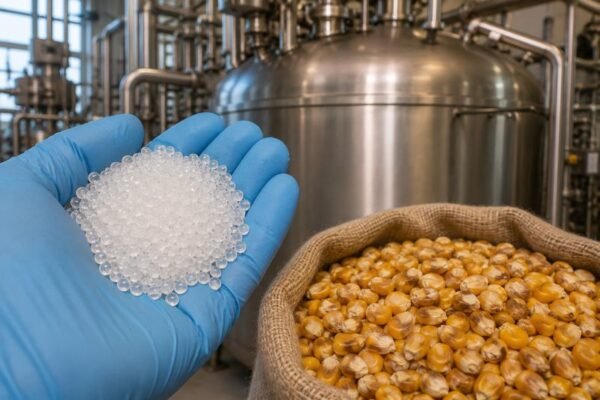
Clear PLA bioplastic pellets in a gloved hand beside dried corn kernels and an industrial fermentation tank for plant-based polymer production

Bioplastics – The Chemistry That Turns Plant Sugar Into Polymer Chains

A 2,000-tonne fermentation tank in Blair, Nebraska is filled with something that looks like thin gruel. Corn steep liquor, the aqueous slurry left after wet milling separates starch from the kernel, sits in the tank at 40 degrees Celsius while a carefully managed culture of Lactobacillus bacteria converts dissolved sugars into lactic acid. The process…

Read More
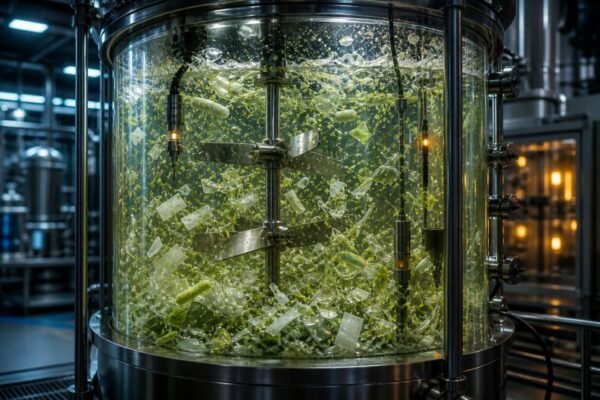
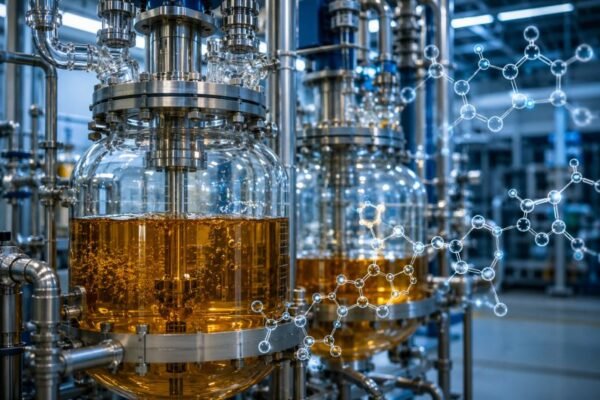
Glass chemical reactors with amber liquid and steel pipework inside a recycling chemistry processing plant for molecular material recovery.

The Chemistry of Recycling: How Used Materials Are Broken Back Into Molecules

In Merseburg, a city in Saxony-Anhalt in central Germany, a facility operated by APK AG runs an unusual version of plastic processing. The mixed polyethylene films entering the plant are not melted and extruded, as conventional recycling does. They are dissolved. A purpose-designed solvent separates the polymer chains from their contaminants, isolates the pure material,…

Read More
Quantum structures and energy pathways related to clean energy research at molecular scale.

Quantum Mechanics in Eco-Tech – The Physics Behind Tomorrow’s Clean Energy Devices

In 2007, a research team at UC Berkeley put a sample of green sulfur bacterium into a laser spectrometer and watched energy move through its photosynthetic machinery in real time. The bacteria had been collected from an anoxic sulfur spring. The experiment was designed to measure how quickly an absorbed photon transferred its energy from…

Read More
A small green plant growing inside a light bulb placed on soil, symbolizing the connection between photosynthesis and sustainable energy solutions.

Basics Of Photosynthesis – Why Bright Leaves Do Not Mean High Power

Basics of Photosynthesis in sustainable energy meet reality when balcony plants glow in harsh sun while rooftop monitors show modest power. Photosynthesis is the way living surfaces turn sunlight into stored chemical energy instead of instant output. Many people assume stronger glare on leaves or panels means stronger energy gains, yet more light does not…

Read More